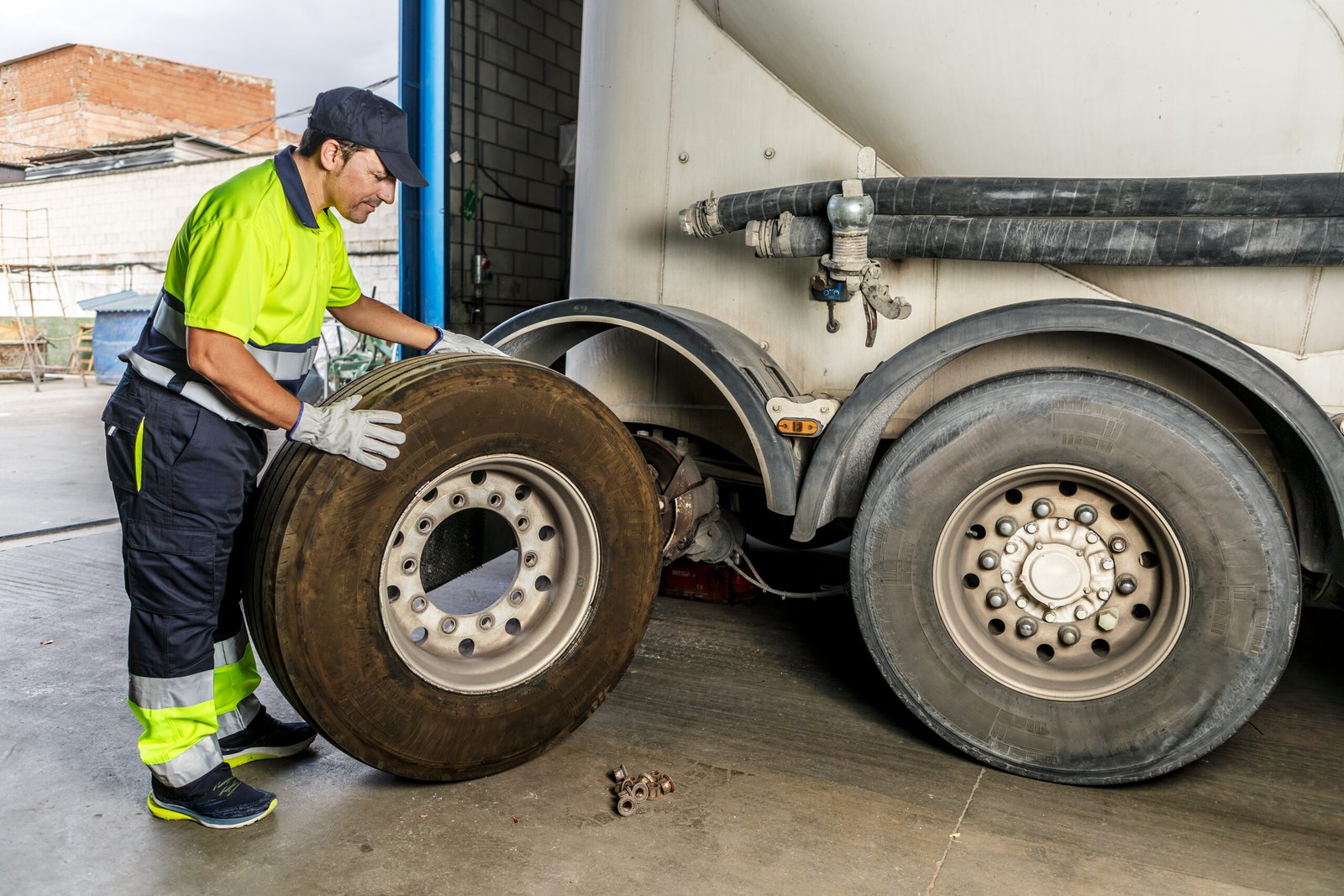
Tires are the second-biggest line item a truck has after fuel. Alignment is the cheapest way to protect both — and your tires will tell you when it's off if you know how to read them.
What bad alignment feels like
- The truck pulls to one side on a flat road
- The steering wheel sits crooked when you're going straight
- Wandering — you're always correcting at highway speed
- New steer tires that howl or wear out in months, not years
Reading the tire — the wear patterns
Run your hand across the tread. Smooth one way, sharp the other? That's feathering — a toe problem. Worn on one shoulder only? That's camber. Scalloped, wavy dips around the tire (cupping) usually means a worn shock or a loose front-end part, not just alignment. Even wear across the middle or both shoulders is inflation, not geometry.
On drives and trailers, alignment matters just as much as the steer axle — a trailer that's out of track (a bent axle or worn bushings) drags every tire on the unit at an angle and quietly burns fuel the whole time.
Why alignment pays for itself
A tractor-trailer that's out of alignment doesn't just wear tires — it burns extra fuel dragging rubber sideways down the road. A proper total-vehicle alignment routinely pays for itself in tire life and MPG before the next service interval. It's the definition of cheap insurance.
What we do
We don't just set the steer toe and call it done. We check total-vehicle alignment — steer, drives and trailer — measure toe, camber and caster, look for bent components, worn kingpins, tie-rod ends and bushings, and set everything back to the manufacturer's spec. If a shock or front-end part is causing cupping, we tell you before it eats another tire.
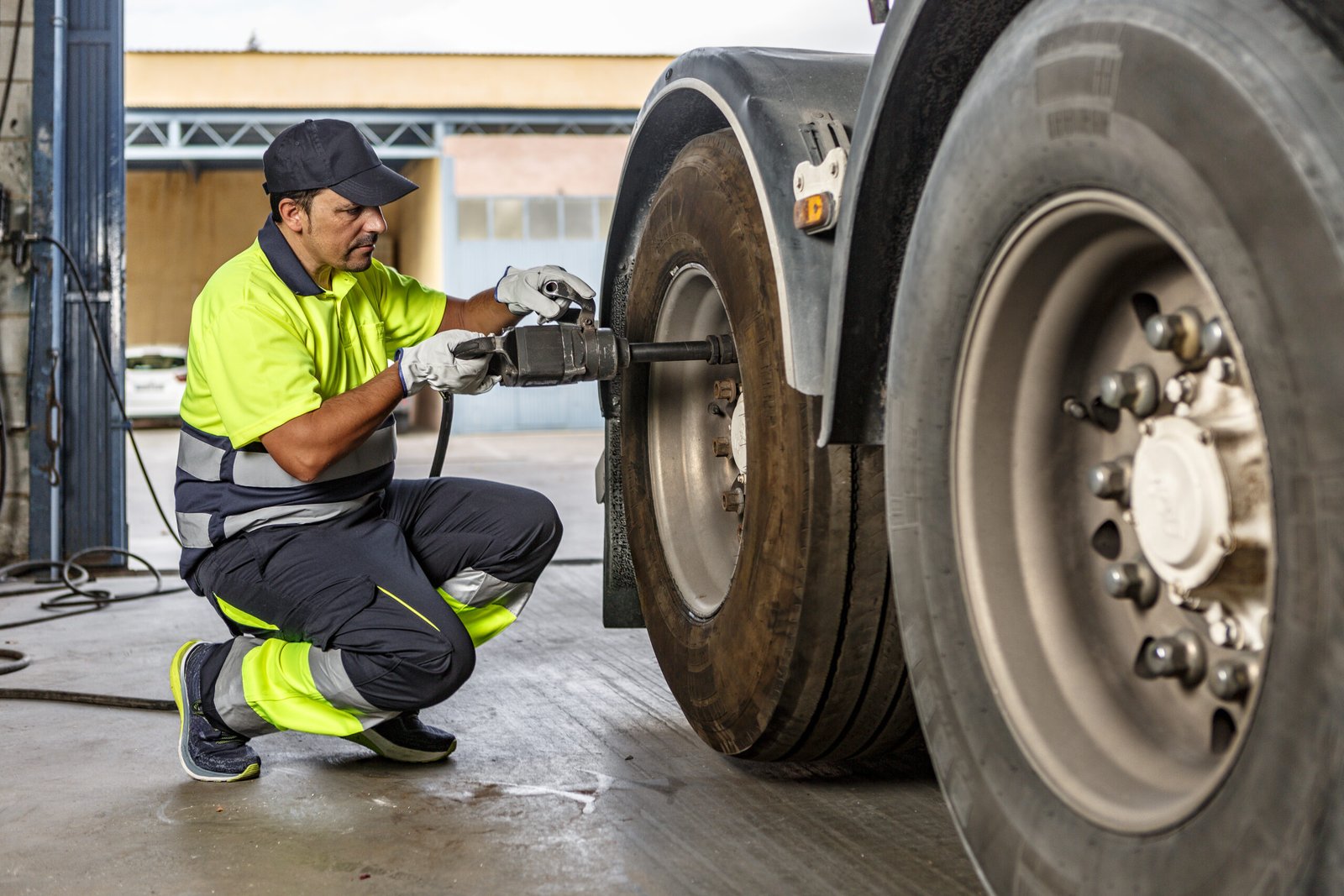
Need alignment? Long Road Repair handles it in-shop and mobile across the South Puget Sound. See our alignment service or call and talk to a real tech.
FAQ
How often should a semi truck be aligned?
A good rule is at every new set of steer tires, after any front-end or suspension work, or any time you feel a pull or see uneven wear. Fleets often align on a set schedule to protect tire budgets.
Can alignment really improve my fuel mileage?
Yes. A truck that's out of track drags tires at an angle, which adds rolling resistance. Correcting alignment reduces that drag and recovers MPG along with tire life.
Do you align trailers and drive axles too?
We do. A steer-only alignment misses half the problem — a trailer out of track or a dog-tracking drive axle wears tires and burns fuel just as fast. We check the whole vehicle.
My steering wheel is crooked but the truck drives straight — is that alignment?
Usually yes; it points to a toe setting that's off even though the pull cancels out. It's worth correcting before it shows up as feathered tire wear.
Truck down? Let's get you rolling.
Book your truck or trailer in, or call and talk to a real tech.
Book a repair →Call (425) 900-6212